My Chemistry Project: Acid Rain
This is a project for my tenth grade science class. For every unit, we are to conduct a project about a certain topic that enables us to think creatively about the world around us. For our chemistry unit, I have decided to conduct my project on acid rain, a form of precipitation that is seemly harmful to us and the natural environment around us.
Website constructed and edited by Pranjal Nayak, SNC 2DW
What is Acid Rain?
occuring close by.
Acid rain is a form of precipitation that includes many acidic elements, such as sulfuric or even nitric acid that falls to the ground from the atmosphere. The acids can appear in wet or dry forms. This can also include rain, snow, fog, hail or even dust that is acidic.
Brief History and Origin

Acid rain was first identified in North America during the mid-1960s, and was later shown to result from long-range transport of sulfur dioxide and nitrogen oxides from power plants. But before, acid rain was discovered in the 19th century by Robert Angus Smith, a Scottish chemist, who measured high levels of acidity in rain falling over industrial regions of England and contrasted them to the much lower levels of acidity that he observed in less polluted areas near the coast.
Description
Acid rain is caused by a chemical reaction that begins when compounds are released into the air. These substances can rise very high into the atmosphere, where they mix and react with water, oxygen, and other chemicals to form more harmful and acidic pollutants. Acid rain can be described as precipitation with a pH value below 5, which particularly occurs when large amounts of pollution are added to the atmosphere.
Acid rain is mainly due to human made pollution and industrial emissions. These emissions contain nitrogen oxides (from volcanic eruption), sulfur dioxide and sulfur trioxide (car/industrial emissions), which when mixed with water become sulfurous acid, nitric acid and sulfuric acid, which then is absorbed by the atmosphere. The result of this following chemical reaction makes acid rain.
There a lot of H⁺ ions that are present in acid rain, therefore they are free to react. Acid rain is known to cause damage in metal and stone structures as well as speeding up corrosion of many elements including iron. Acid rain is also known to have a slight acidic taste, being odorless and maintaining a liquid state at an ambient temperature and can appear in wet or dry forms.
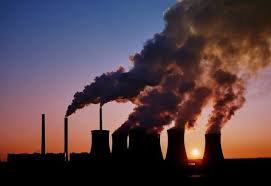
Pollutants that are released into the air are known as the principle cause of acid rain.
Formation
The formation of acid rain is a lengthy process and involves many compounds which are released into the atmosphere and then are transported by wind and air currents and deposited back into the Earth’s surface. Rain water is naturally acidic, with a pH of 5 because it reacts with carbon dioxide (CO2) in the atmosphere and forms mildly acidic carbonic acid (H2CO3) before it becomes rainwater. H2O (l) + CO2 (g) → H2CO3(aq); (Reaction – Synthesis)
Formation of Nitrogen Dioxide: N2(g) + 2O2(g) -> 2NO2(g) (Reaction: Synthesis)
Both sulfur dioxide and nitrogen dioxide are acidic oxides and react with water to form acids.
Sulfur dioxide would then react with water in order to form sulfurous acid.
SO2(g) + H2O(l) -> H2SO3(aq) (Reaction: Synthesis)
Substances in the atmosphere catalyse the reaction between sulfurous acid and oxygen to form sulfuric acid.
2H2SO3(aq) + O2(g) -> 2H2SO4(aq) (Reaction: Synthesis)
Nitrogen dioxide reacts with water to form a mixture of nitric acid and nitrous acid.
2NO2(g) + H2O(l) -> HNO3(aq) + HNO2(aq) (Reaction: Double Displacement)
Substances in the atmosphere then catalyse the reaction between nitrous acid and oxygen causing the formation of even more nitric acid.
2HNO2(aq) + O2(g) -> 2HNO3(aq) (Reaction: Synthesis)
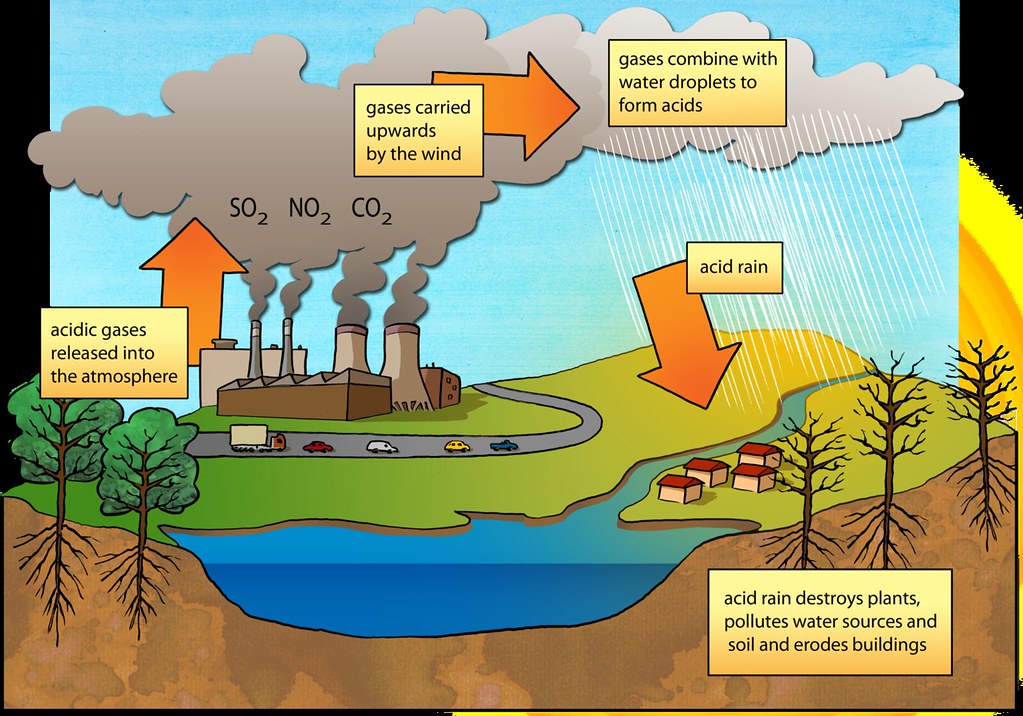
Sulfuric acid and nitric acid are soluble in water. They form the major acids that serve as main components in acid rain. They combine together and fall onto the Earth’s surface. As strong acids are brought to the surface, they begin to cause harmful effects on the natural environment around us.
Effects on Environment
The ecological effects of acid rain are most clearly seen in aquatic environments, such as streams, lakes, and wetlands where wildlife is under threat by the presence of acid rain. As acid rain flows through soil, acidic rainwater can filter aluminum from soil clay particles and then can flow into streams and lakes. The more acid that is introduced to the ecosystem, the more aluminum is released. The waste from leaching metals can also contaminate the surrounding environment. This kills any organisms and their eggs. Acidic rain is also responsible for the damage and death of trees in high-altitude forests, as it decreases essential nutrients in the soil.
There is only a certain pH value an organism can deal with.
For example, frogs can tolerate a pH scale up to 4, while a snail can deal with 6.
Believe it or not, even the world’s greatest monuments are affected by acid rain. Let’s take the Taj Mahal in Agra, India for example.

Left side: The Taj Mahal before acid precipitation
Right side: The Taj Mahal after acid precipitation
Acid that is present in the air reacts with calcium carbonate, a compound present in marble. A chemical reaction occurs and makes a yellow-like color. Reaction: CaCO3 + H2 SO4 -> CaSO4 + H2O + CO2

from acid precipitation.
In the process, many monuments and statues are affected, even those made up of metal and stone, which corrode when acid rain is present. This also makes metals in monuments more dissolvable in water and would cause the stone to eventually collapse. Harvard University has a statue of a chinese bixi which they cover up to prevent acid rain from affecting it.
Effects on Human Health
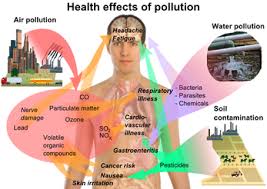
Acid rain does not harm humans directly, the pollutants that is made from human made emissions are heavily linked to health problems. The gas particles of sulphate and nitrate carried by the wind and the air which can spark chronic lung problems, like asthma and bronchitis.
Conclusion
Acid rain is a very serious and critical issue that has a huge effect on our world as we know it today. The sulfur dioxide and carbon dioxide are both released in large amounts through the burning of different fuels such as coal and other non-renewable fossil fuels. As a result of this, acid rain negatively affects the environment by damaging the soil, killing plant life, damaging wildlife, and affecting humans in the process. We can use other renewable sources of energy such as solar power or electric cars to prevent the further occurrence in the near future. It may not seem as though acid rain is that much of an issue, but it can cause more that we can even imagine.
Bibliography
- “Harvard Bixi.” Wikipedia, Wikimedia Foundation, 26 Oct. 2019, https://en.wikipedia.org/wiki/Harvard_Bixi.
- Schab, Terri. “The Advantages of Acid Rain.” Sciencing, 2 Mar. 2019, https://sciencing.com/advantages-acid-rain-16051.html.
- Butler, Thomas J., and Gene E. Likens. “Acid Rain.” Encyclopædia Britannica, Encyclopædia Britannica, Inc., 11 Oct. 2019, https://www.britannica.com/science/acid-rain.
- ww1.speechfoodie.com. “Effects Of Water Pollution On Human Health Essay.” Cake Ideas, https://ww1.speechfoodie.com/effects-of-water-pollution-on-human-health-essay/.
- EPA, Environmental Protection Agency, https://www3.epa.gov/acidrain/education/site_students/beingdone.html.
- “What Is Acid Rain and How Is It Formed?” Sustainability for All, https://www.activesustainability.com/climate-change/what-is-acid-rain/.
 Site Title